
🇬🇷 Greece · wedding
Stefana — the Greek Orthodox wedding crowning that everyone photographs from below
Two crowns linked by a ribbon, swapped over the couple's heads three times by the koumbaros — the centerpiece moment of a Greek Orthodox wedding.
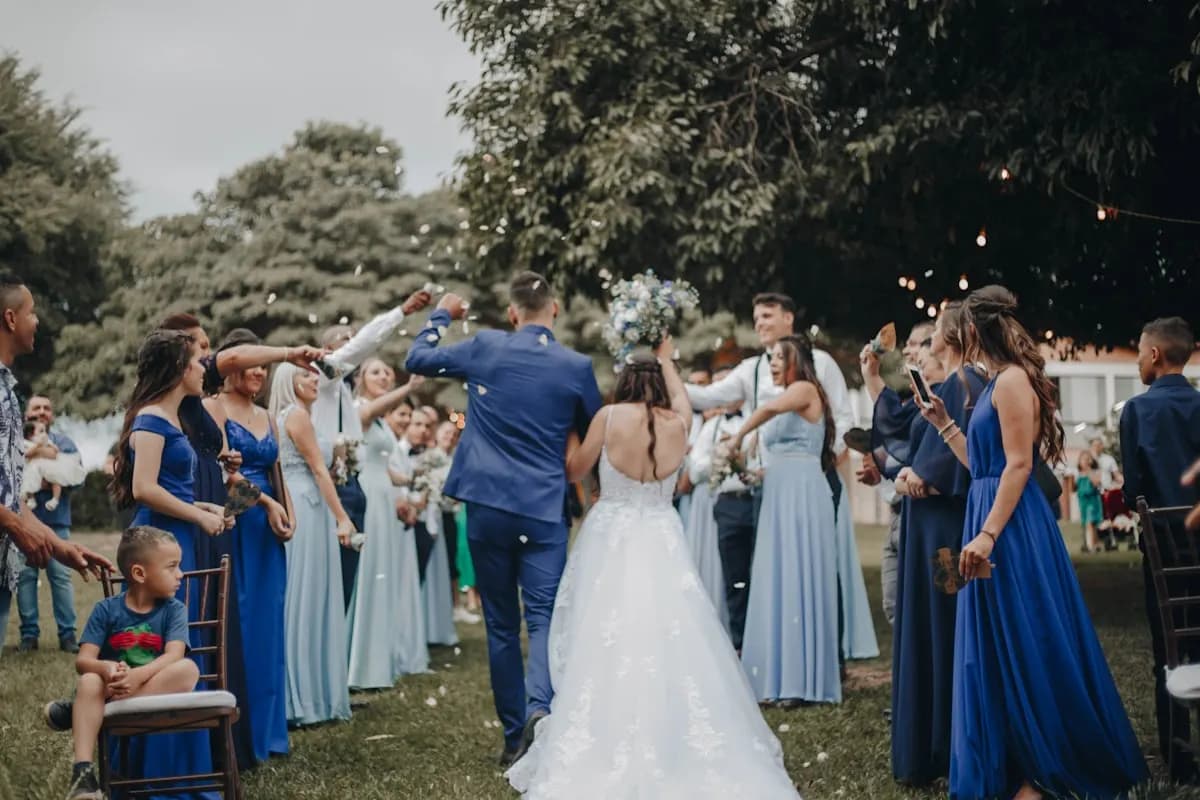
A Greek Orthodox wedding (*gámos*) is a service rather than a contract — there's no spoken "I do," no exchange of vows. Instead the priest performs a service of about 30-45 minutes built around two centerpiece moments: the **stefanoma** (crowning) and the **dance of Isaiah**.
The stefanoma
After the rings are exchanged and blessed three times, the priest places two **stefana** — wedding crowns — on the heads of the bride and groom. The crowns are linked by a long white ribbon, symbolising that the two are now joined. The crowns themselves vary: in Greece they are typically small wreaths of orange blossom or fresh flowers; in the diaspora and in some monasteries they are larger metal or gilded wood crowns. They are kept by the couple in a custom display case (*stefanothiki*) — many Greek households have them framed on the bedroom wall.
After placing the crowns, the priest hands them to the **koumbaros** (best man / sponsor — usually the closest friend of the groom, often the godfather of any future children). The koumbaros lifts the crowns slightly and swaps them between the bride's and groom's heads — three times. The crowd photographs from below because the angle catches the crowns mid-swap with the iconostasis (the gold-iconed wall of the Orthodox church) behind. This is the single most photographed moment of a Greek wedding.
The dance of Isaiah
While the couple is still crowned, the priest leads them in a slow circular walk three times around the table holding the gospel — the **dance of Isaiah** (Χορός του Ησαΐα). The koumbaros walks behind, holding the ribbon between the crowns. The choir chants three hymns. The crowd photographs from every angle as the couple passes. After the third circle the priest blesses them, removes the crowns, and the legal Greek civil registration is signed.
Cretan & island variations
A Cretan wedding adds extended dance-and-shoot festivities the night before the wedding — particularly a *rifle* (or these days a paintball) firing into the air for joy. Island weddings (Mykonos, Santorini) often happen outdoors at chapels overlooking the sea, with the entire wedding party walking in procession up a hill afterwards. Mainland weddings are usually indoor church services followed by a hall reception.
What guests photograph
- The stefanoma crown-placing — from the side
- The crown-swapping by the koumbaros — from below
- The dance of Isaiah — wide shot of the circling
- The koumbaros holding the ribbon
- The breaking of the wine cup at the end (a Cretan + island custom)
- The bridal exit out of the church
The reception
The Greek wedding reception (*deksiosi*) is built on dancing. The *kalamatianos*, the *tsamiko*, the *sirtaki* (the dance from Zorba), and the *zeibekiko* (a solo male dance with the rest of the crowd kneeling around) are all standard. Plates are no longer broken at modern receptions, but flowers and confetti are thrown plentifully. Dinner runs until 2 or 3 am. Greek couples typically don't leave first — the band leaves first, and the family stays until the lights come on at 4 am.
Citations & further reading
- Wikipedia (Greek): Γάμος
- Wikipedia: Marriage in Greece
- Ecumenical Patriarchate of Constantinople: *Service of the Crowning*
Frequently asked
What are stefana?
Two wedding crowns linked by a long white ribbon, placed on the heads of the Greek Orthodox bride and groom by the priest. They're kept by the couple afterwards in a stefanothiki display case — many Greek households frame them on the bedroom wall.
Why does the koumbaros swap the crowns three times?
It symbolises the unity of the couple — they share crowns, share blessings, share the new life. Three is the sacred number in Orthodox practice (Trinity). The koumbaros (best man) performs the swap.
What is the dance of Isaiah?
After the crowning, the priest leads the still-crowned couple in a slow circular walk three times around the gospel table while the choir chants three hymns. It's the procession that symbolises walking together into married life.
Do Greeks really break plates at weddings?
Not anymore at most modern weddings — fire safety regulations and venue rules made it impractical. Instead, flowers and confetti are thrown plentifully. Plate-breaking still happens at smaller, very traditional rural celebrations.
Other cultures in the series
Hosting your own Greece wedding?
Galeira gives you one QR code that turns every guest's phone into a camera and mirrors approved photos to a cloud you already own once it's connected. Free to start.
Create your album →